
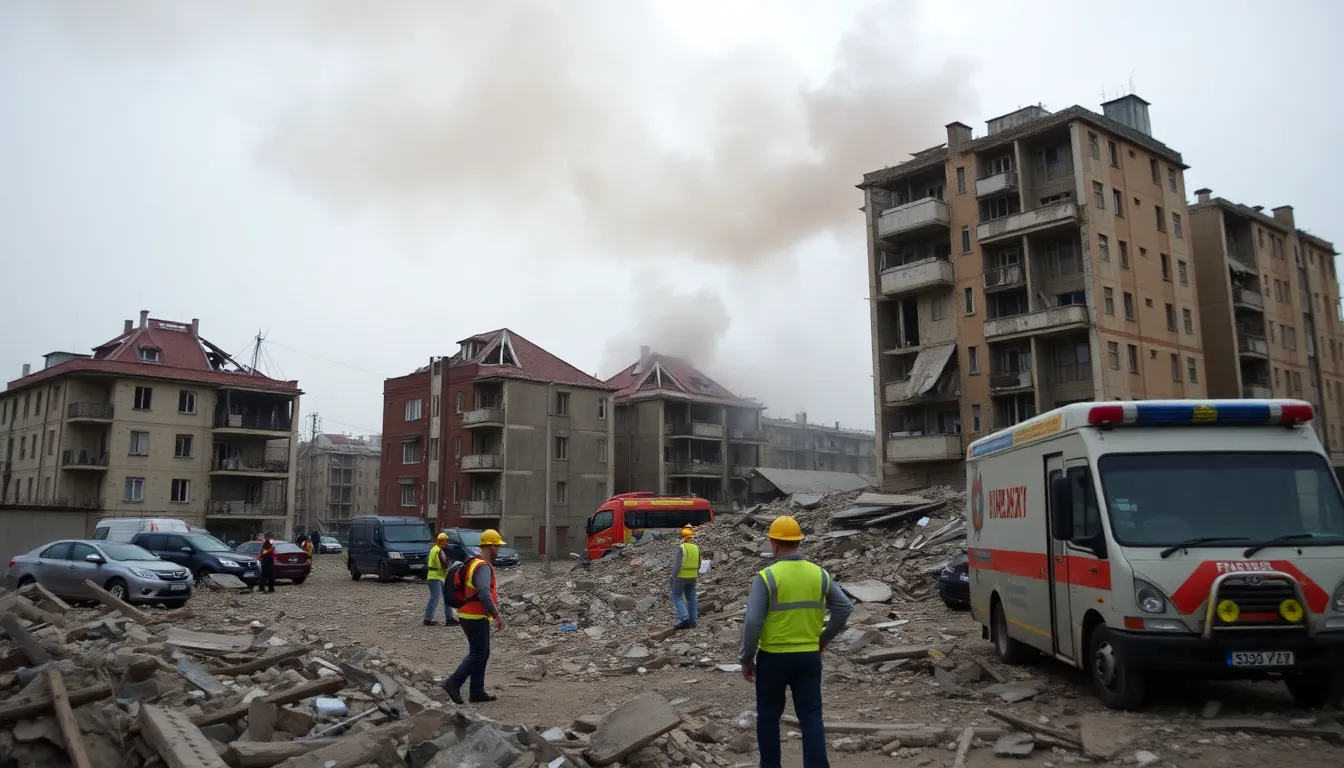
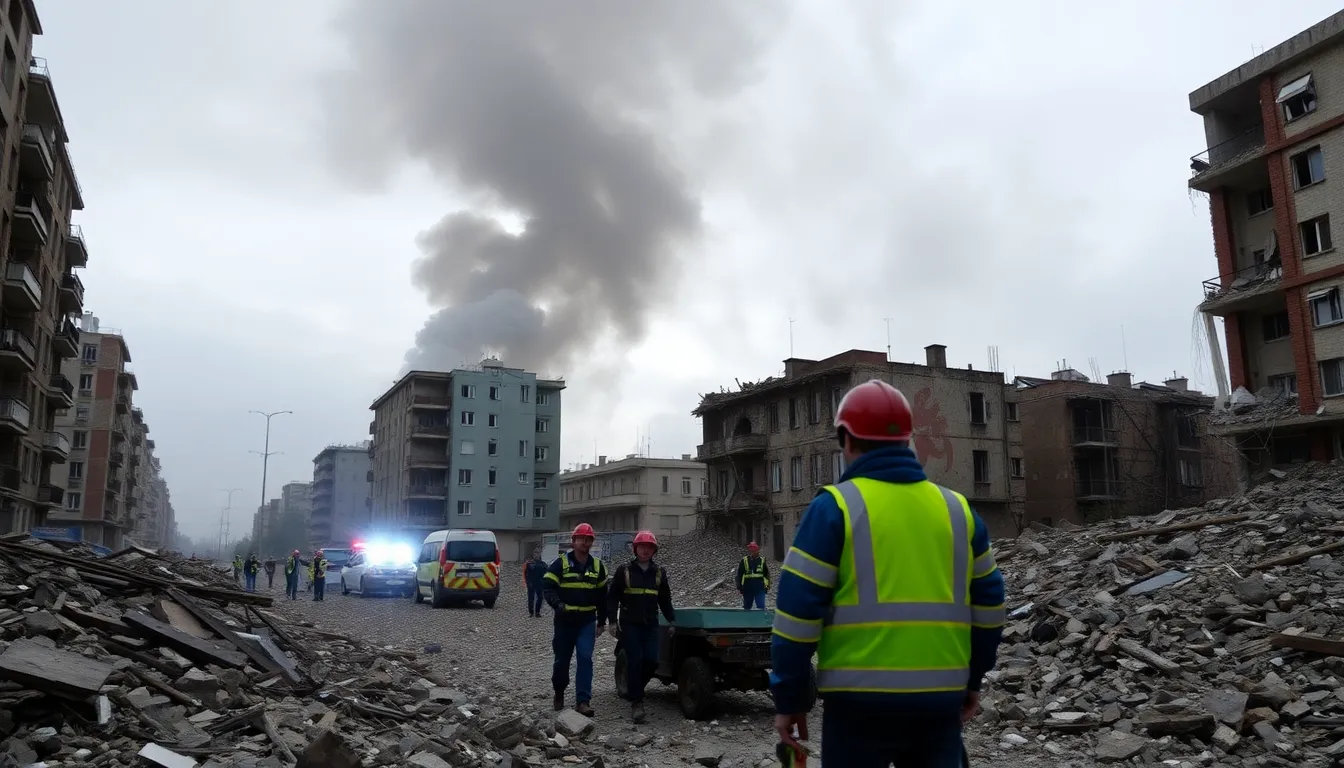
The assault on Kharkiv, Ukraine’s second-largest city, involved multiple missile strikes that damaged residential buildings and critical infrastructure. Reports indicate that at least 20 civilians were injured, prompting emergency services to respond swiftly to rescue efforts. Meanwhile, Kyiv faced a barrage of drone attacks, with air defense systems activated to intercept incoming threats. For more on the impact of military actions, check our article on recent global military incidents.
This escalation comes amid ongoing diplomatic efforts to reach a ceasefire, which have so far been unsuccessful. The international community, including NATO and the European Union, has condemned the attacks, calling for immediate de-escalation and emphasizing the need for a diplomatic resolution to the conflict. Understanding these diplomatic efforts is crucial, as highlighted in our feature on international relations and stability.
As tensions continue to rise, the humanitarian situation in Ukraine remains dire. With winter approaching, the destruction of infrastructure and homes exacerbates the challenges faced by displaced populations. The situation underscores the urgent need for increased humanitarian aid and support for those affected by the violence.
Historical background of the Russia-Ukraine conflict
The conflict between Russia and Ukraine has deep historical roots that date back centuries. Ukraine was part of the Soviet Union until its dissolution in 1991, after which it became an independent nation. However, the legacy of Soviet rule left many ethnic Russians in Ukraine, particularly in the eastern regions, who have often felt a stronger affinity towards Russia than towards the Ukrainian state. This historical connection has fueled tensions between the two nations, especially as Ukraine sought to assert its independence and align more closely with Western institutions like the European Union and NATO. For a deeper understanding of political shifts in the region, read about strategic geopolitical movements.
In 2014, the situation escalated dramatically when Russia annexed Crimea following Ukraine’s Euromaidan protests, which ousted the pro-Russian president Viktor Yanukovych. This event marked a significant turning point in the relationship between the two countries, leading to a protracted conflict in Eastern Ukraine, where Russian-backed separatists declared independence in the Donetsk and Luhansk regions. The annexation of Crimea was widely condemned by the international community, leading to economic sanctions against Russia and increased military support for Ukraine from Western nations.
Recent Developments
In the years following the annexation, sporadic fighting continued in Eastern Ukraine, but tensions flared again in late 2021 and early 2022, as Russia amassed troops along the Ukrainian border. The situation prompted fears of a full-scale invasion, which became a reality in February 2022. The attacks on Kharkiv and Kyiv were part of a broader military strategy by Russia to destabilize Ukraine and assert its influence in the region. These actions have drawn widespread condemnation and have further isolated Russia on the global stage.
The ongoing conflict has had profound economic and social implications for Ukraine, leading to a humanitarian crisis as millions of Ukrainians have been displaced from their homes. The war has also prompted a reevaluation of security policies in Europe, with countries reassessing their defense strategies and increasing military expenditures in response to perceived threats from Russia. As the conflict continues, the historical grievances and geopolitical ambitions that underpin it remain critical to understanding the dynamics at play in this volatile region.
Key stakeholders and their interests in the current situation
The ongoing conflict in Ukraine, particularly the recent attacks on Kharkiv and Kyiv by Russian forces, has drawn the attention of various stakeholders with differing interests. These actors include the Ukrainian government, the Russian government, international organizations, and neighboring countries, each playing a significant role in shaping the dynamics of the situation.
The Ukrainian government is primarily focused on defending its sovereignty and territorial integrity. This involves mobilizing military resources, securing international support, and maintaining civilian morale. The leadership aims to reinforce its position both domestically and on the global stage, seeking assistance in terms of military aid, economic sanctions against Russia, and humanitarian support for affected civilians.
On the other hand, the Russian government is pursuing its strategic interests in the region, which include reasserting influence over former Soviet territories and countering NATO expansion. The Kremlin’s actions are driven by a desire to project power and control, seeking to destabilize Ukraine to prevent it from aligning more closely with Western institutions.
- International Organizations: Entities like the United Nations and NATO are involved in diplomatic efforts to mediate the conflict, but their influence is often limited by the geopolitical interests of member states.
- Neighboring Countries: Countries bordering Ukraine, such as Poland and Hungary, have a vested interest in the stability of the region, as they face potential spillover effects from the conflict, including an influx of refugees and economic disruption.
- Humanitarian Organizations: NGOs and humanitarian agencies are focused on providing aid and support to civilians affected by the conflict, highlighting the urgent need for humanitarian corridors and assistance.
Key legal and economic issues also arise from the conflict. The imposition of sanctions on Russia by Western nations aims to pressure the Kremlin economically, but these measures can also have unintended consequences on global markets and energy supplies. Additionally, the legal ramifications of military actions raise questions about war crimes and accountability, complicating the international response to the conflict.
Impact of the attacks on civilians and international relations
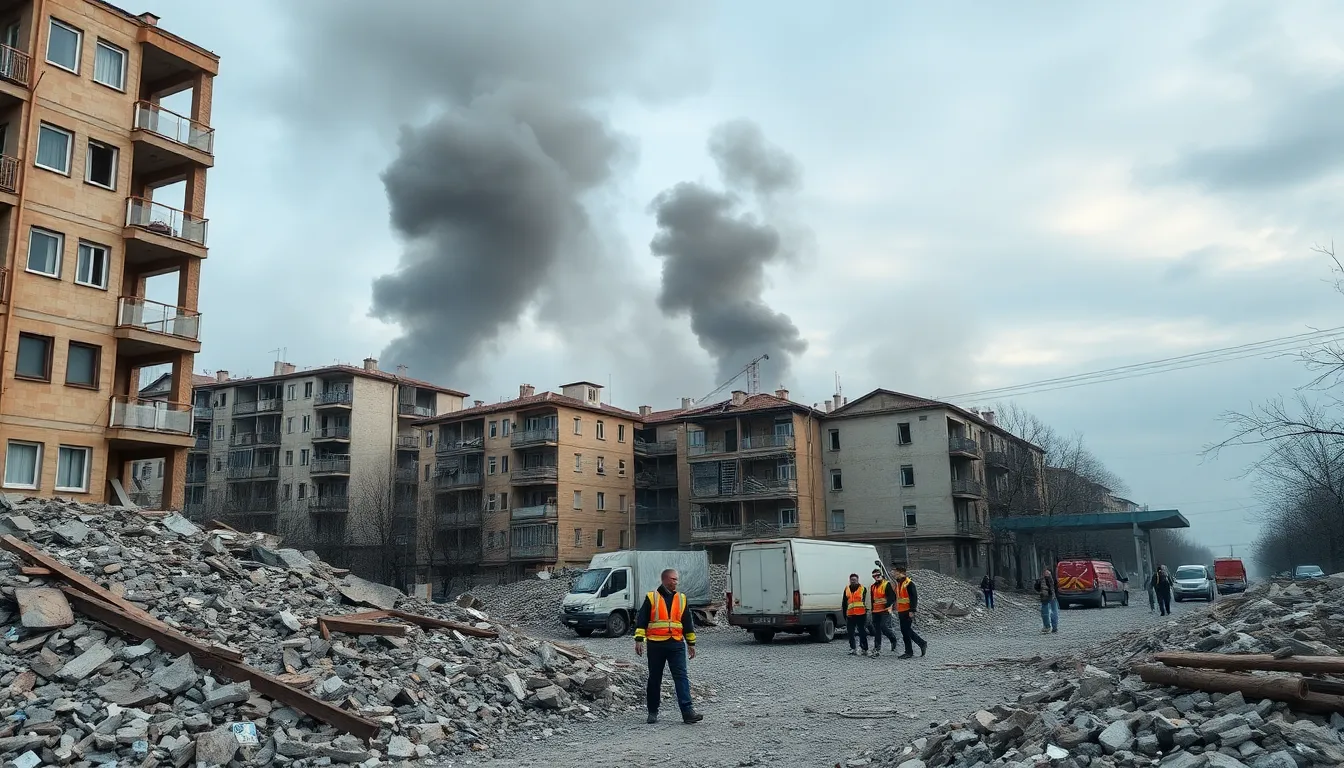
The recent attacks on Kharkiv and Kyiv have far-reaching consequences for various groups and industries. Civilians in these regions are facing immediate threats to their safety and well-being, leading to increased displacement and humanitarian needs. The psychological toll on the population is significant, as fear and uncertainty permeate daily life.
In terms of economic impact, local businesses are disrupted, particularly those reliant on stable conditions for operations. Industries such as retail, hospitality, and transportation are likely to experience a downturn as consumer confidence wanes. The agricultural sector, crucial for Ukraine’s economy, may also face challenges due to damage to infrastructure and supply chain interruptions.
Internationally, the attacks could exacerbate tensions between Russia and Western nations, leading to increased sanctions and diplomatic isolation for Russia. This situation may also prompt NATO and EU countries to bolster their support for Ukraine, both militarily and economically, potentially reshaping geopolitical alliances.
- Short-term impacts: Increased civilian casualties, displacement, and disruption of daily life.
- Mid-term impacts: Economic downturn in affected regions, potential for increased military aid to Ukraine.
- Risks: Escalation of conflict, further humanitarian crises, and long-term economic instability.
- Opportunities: Potential for international aid and investment in reconstruction efforts, strengthening of global alliances against aggression.
As the situation evolves, the response from the international community will be crucial in determining both the immediate and long-term ramifications of these attacks on Ukraine and its people.
A: The recent attacks are part of Russia’s ongoing military strategy to regain control over Ukraine, which has intensified following previous escalations in the conflict. A: Ukrainian forces have been mobilizing to defend key cities and have called for international support to bolster their defenses against the Russian aggression. A: The international community has condemned the attacks, with many countries calling for sanctions against Russia and increased military aid to Ukraine. A: Yes, various humanitarian organizations are working to provide aid to civilians affected by the attacks, including food, shelter, and medical assistance. A: The escalation could lead to a broader conflict in the region, increased refugee flows, and a significant impact on global security and economic stability.
Frequently asked questions about the attacks
Key takeaways and future outlook on the conflict
The recent attacks on Kharkiv and Kyiv signify a troubling escalation in the ongoing conflict between Russia and Ukraine. As military strategies evolve, the impact on both civilian populations and geopolitical dynamics becomes increasingly pronounced. Observers must remain vigilant as these developments may influence international responses and the broader security landscape in Eastern Europe.
In the coming weeks, the situation could shift dramatically depending on the actions taken by both Ukrainian forces and Russian military leadership. The resilience of Ukraine’s defense, alongside potential shifts in international support, will play a critical role in shaping the conflict’s trajectory.
- Monitor the international community’s response and any potential sanctions against Russia, which could alter the course of military engagement.
- Pay attention to the humanitarian situation in affected areas, as civilian casualties and displacement will likely escalate.
- Watch for shifts in military strategy from both sides, particularly regarding the use of technology and tactics in urban warfare.
- Consider the implications of these attacks on NATO’s posture and the potential for increased military support for Ukraine.
- Evaluate the long-term geopolitical ramifications, including Russia’s relations with neighboring countries and the West.