
The announcement is significant as it ensures stability at the helm of the Federal Reserve during a pivotal time for the economy. With inflation rates fluctuating and economic recovery still in progress, Powell’s leadership is seen as vital for maintaining continuity in policy direction. For more on the implications of Federal Reserve decisions, check out our article on What occurred on March 15.
Powell’s term as Fed Chair is set to expire in February 2026, but the process of confirming a new chair can be lengthy and complex. His commitment to remain in office until a successor is appointed reflects a desire to avoid any potential disruptions in monetary policy during this transitional period.
The Biden administration has been considering various candidates to succeed Powell, but no formal announcement has been made yet. As the economy faces challenges such as rising interest rates and global uncertainties, the choice of a new Fed Chair will be closely watched by investors and policymakers alike.
Understanding the importance of the Fed Chair position
The Federal Reserve Chair plays a crucial role in shaping U.S. monetary policy and influencing the economy at large. As the head of the central bank, the Chair is responsible for setting interest rates, regulating banks, and providing oversight on the implementation of monetary policy. This position not only affects inflation and employment rates but also has global implications, as decisions made by the Fed can impact international markets and economies.
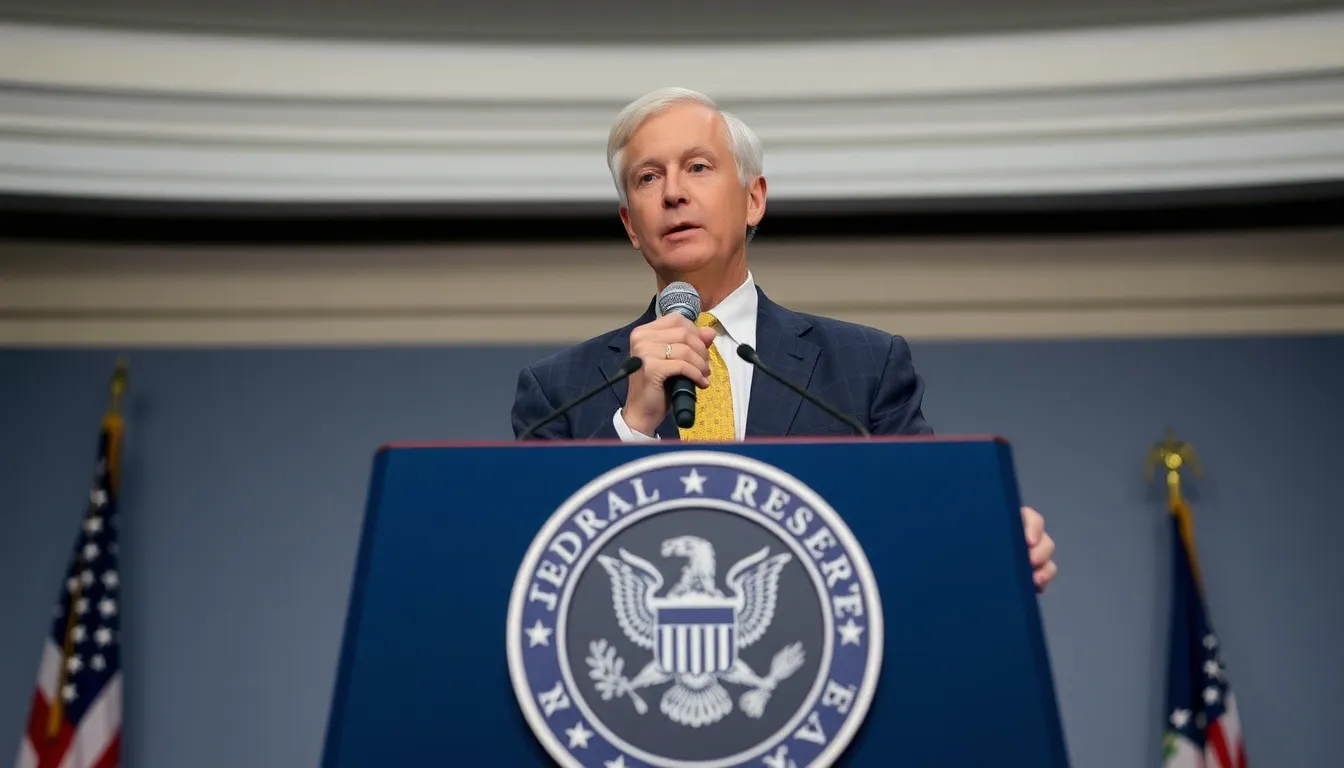
Jerome Powell, who was appointed as the Fed Chair in 2018, has navigated the central bank through significant economic challenges, including the COVID-19 pandemic and its aftermath. His leadership during these turbulent times has been characterized by a focus on maintaining economic stability and supporting recovery efforts. Powell’s commitment to remain in his position until a successor is confirmed underscores the importance of continuity in leadership during uncertain economic times.
The process of appointing a new Fed Chair is typically political and can be influenced by the sitting president’s economic priorities. Historically, the confirmation of a new Chair has often been accompanied by intense scrutiny and debate, reflecting the high stakes involved in monetary policy decisions. For instance, the confirmation of Ben Bernanke in 2006 and Janet Yellen in 2014 were both marked by significant discussions regarding their approaches to monetary policy and regulatory oversight.
The Role of the Senate in Confirmation
The Senate plays a pivotal role in confirming the President’s nominee for Fed Chair. This process can be prolonged, as senators may seek assurances on various monetary policy issues or express concerns about the nominee’s past decisions. In the case of Powell, his re-nomination by President Biden has prompted discussions about the direction of monetary policy, particularly in light of ongoing inflationary pressures and economic recovery efforts. For insights into how regional conflicts can impact global markets, read our article on A Look at the Escalating Battle for the Strait of Hormuz.
Key stakeholders and implications of Powell’s announcement
Jerome Powell, the current Chair of the Federal Reserve, has announced his intention to remain in his position until a successor is confirmed. This decision has significant implications for various stakeholders, including the Federal Reserve, the U.S. government, financial markets, and the public.
The Federal Reserve, as the central bank of the United States, plays a crucial role in shaping monetary policy and managing economic stability. Powell’s continued leadership ensures continuity in policy-making during a critical period marked by inflationary pressures and economic uncertainty. His commitment to serve until a successor is appointed may provide reassurance to markets concerned about potential shifts in monetary policy.
The U.S. government, particularly the Biden administration, has a vested interest in the appointment process for the next Fed Chair. The selection of a successor could reflect the administration’s economic priorities, such as addressing inflation, employment, and financial regulation. Delays in confirming a new chair could lead to uncertainty in economic policy and hinder the government’s ability to respond effectively to economic challenges.
- Market Reactions: Financial markets may react positively to Powell’s announcement, as stability in leadership can reduce volatility and foster confidence.
- Political Dynamics: The nomination process may become a point of contention in Congress, influencing the timing and nature of Powell’s eventual successor.
- Policy Continuity: Powell’s presence may ensure a consistent approach to monetary policy, particularly in navigating ongoing inflation concerns.
- Public Perception: The public’s trust in the Federal Reserve may hinge on the perceived effectiveness of its leadership during economic fluctuations.
In summary, Powell’s decision to remain as Fed Chair until a successor is confirmed highlights the interconnectedness of various stakeholders and the importance of stable leadership in economic governance. The implications of this announcement extend beyond the immediate context, influencing broader economic dynamics and stakeholder interests. To understand more about ongoing global challenges, see our discussion on Can Ukraine’s war-torn wheatfields be cleansed.
Market reactions and potential effects on economic policy
The announcement from Federal Reserve Chair Jerome Powell regarding his intention to remain in office until a successor is confirmed has significant implications for various stakeholders. Key groups affected include investors, financial institutions, and policymakers, all of whom closely monitor the Fed’s direction and leadership stability.
In the short term, market reactions are likely to manifest through fluctuations in stock prices and bond yields. Investors may interpret Powell’s continued leadership as a signal of ongoing monetary policy consistency, which can bolster market confidence. However, uncertainty regarding future leadership could also lead to volatility as stakeholders speculate about the Fed’s long-term monetary stance.
Industries such as banking and real estate may experience immediate impacts. For instance, banks often rely on the Fed’s interest rate decisions to guide their lending practices. In the mid-term, businesses may adjust their investment strategies based on anticipated changes in monetary policy as discussions around Powell’s successor evolve.
- Short-term impacts: Increased market volatility, potential rise in interest rates.
- Mid-term impacts: Adjustments in business investment strategies, shifts in consumer borrowing.
- Risks: Uncertainty regarding future Fed policies could lead to cautious spending and investment.
- Opportunities: Stable leadership may provide a conducive environment for long-term investments.
Regions that are heavily dependent on financial markets, such as New York and San Francisco, may see pronounced effects from Powell’s announcement. Local economies could be influenced by changes in investment flows and consumer confidence, as businesses assess the Fed’s trajectory in relation to their operational strategies.
A: Powell is committed to ensuring a smooth transition for the Federal Reserve, which is crucial for maintaining economic stability. A: His continued leadership may provide consistency in monetary policy as the economy navigates challenges. A: Powell will stay until a successor is confirmed, which could take several months depending on the nomination process. A: Several names have been floated, but no official nominations have been made yet. A: Markets may react positively to the news, as continuity in leadership is often viewed as a stabilizing factor.
Frequently asked questions about Powell’s announcement
Looking ahead: what Powell’s decision means for the future
Jerome Powell’s commitment to remain as Fed Chair until a successor is confirmed signals continuity in monetary policy during a critical period for the U.S. economy. This decision may provide stability in the markets, as investors typically favor a steady hand in times of uncertainty. Powell’s leadership will likely focus on navigating inflationary pressures while balancing growth, which remains a key challenge for the Federal Reserve.
As the search for a successor unfolds, the implications for fiscal policy and economic outlook will be closely monitored. The Fed’s approach to interest rates and inflation management will be pivotal in shaping the economic landscape in the months ahead, influencing everything from consumer spending to investment strategies.
- Market Stability: Powell’s continued leadership may help maintain investor confidence and reduce volatility in financial markets.
- Inflation Management: Watch for Powell’s strategies to address ongoing inflation concerns, which will impact consumer behavior and economic growth.
- Successor Dynamics: The process of selecting a successor could introduce new policies or shifts in focus, making it essential to monitor potential candidates.
- Interest Rate Decisions: Future interest rate adjustments will be crucial; Powell’s stance will guide expectations for borrowing costs and economic activity.
- Global Economic Implications: The Fed’s actions under Powell may influence international markets and economic policies, particularly in emerging economies.