
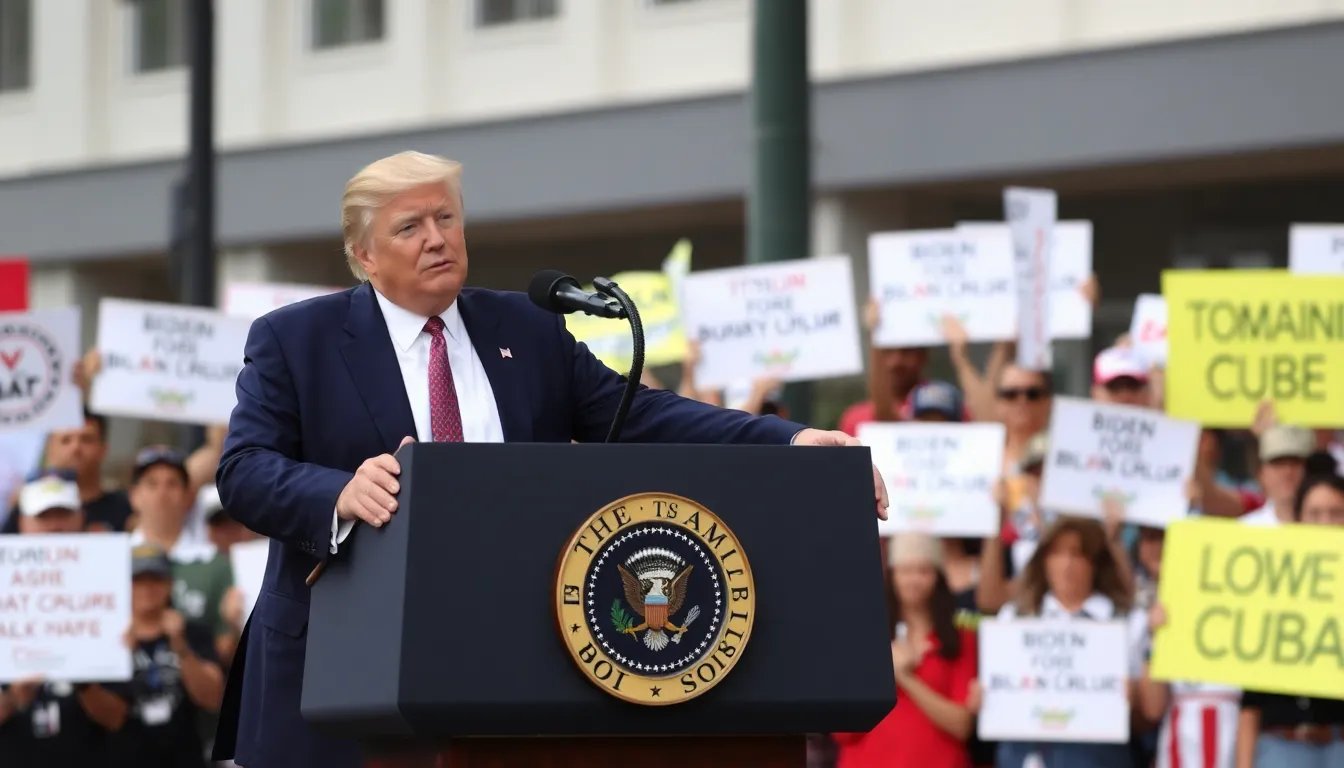
In a speech delivered on October 15, 2023, Trump criticized the Biden administration’s foreign policy, claiming that it has emboldened adversarial regimes in Latin America. He stated that the U.S. must take a firmer stance against what he described as the “axis of tyranny” that includes Cuba, Venezuela, and Iran. Trump’s comments have reignited discussions about U.S. military options in the region, which had largely been dormant since his presidency. For more on this, check out our article on whether Latin America is ready to abandon Cuba.
Key figures in Trump’s circle, including former National Security Advisor John Bolton, have echoed calls for a robust response to Cuba’s actions. The potential for intervention raises complex questions about international law and the implications for U.S.-Cuba relations, which have seen fluctuating levels of engagement since the Obama era. Observers note that any military action could have significant repercussions, not only for the involved nations but also for the broader geopolitical landscape.
As the situation develops, lawmakers from both parties are weighing in on the potential consequences of military intervention. Some express concerns about the risks of escalation and the impact on local populations, while others argue that a strong response is necessary to deter further aggression from authoritarian regimes. The discourse surrounding U.S. intervention in Cuba reflects ongoing debates about American foreign policy in Latin America and the balance between diplomacy and military action, a topic we explored in a recent analysis.
Understanding the historical context of U.S. involvement in Cuba
The relationship between the United States and Cuba has been fraught with tension and conflict for over a century. Following the Spanish-American War in 1898, the U.S. emerged as a dominant power in the Caribbean, leading to the establishment of the Platt Amendment in 1901, which allowed the U.S. to intervene in Cuban affairs and effectively made Cuba a protectorate of the United States. This set the stage for a long history of U.S. involvement in Cuban politics and economy.
In 1959, the Cuban Revolution led by Fidel Castro resulted in the overthrow of the U.S.-backed dictator Fulgencio Batista. Castro’s regime quickly aligned itself with the Soviet Union, prompting the U.S. to impose an economic embargo in 1960, which has persisted in various forms for over six decades. The Cuban Missile Crisis in 1962 further escalated tensions, as the presence of Soviet missiles in Cuba brought the world to the brink of nuclear war, solidifying U.S. hostility towards the island nation.
Recent Developments and Political Climate
In recent years, the political landscape in Cuba has been influenced by internal reforms and external pressures. The Obama administration took steps to normalize relations with Cuba, easing restrictions and promoting engagement. However, the subsequent Trump administration reversed many of these policies, reinstating sanctions and tightening travel restrictions. This shift reflects a broader trend of U.S. foreign policy that oscillates between engagement and isolation, particularly influenced by domestic political considerations.
As the U.S. grapples with crises in Iran and Venezuela, the notion of intervening in Cuba has resurfaced as a potential strategy. The Cuban government has historically supported leftist movements in Latin America, which has made it a target for U.S. interventionist policies. The current political discourse suggests that a renewed focus on Cuba could be part of a larger strategy to counteract perceived threats from regimes aligned with Iran and Venezuela, both of which have been at odds with U.S. interests in the region.
This evolving situation underscores the complexities of U.S.-Cuba relations, shaped by historical grievances, geopolitical strategies, and the ongoing struggle for influence in Latin America. Understanding this background is crucial as the U.S. considers its next steps in the region, particularly in light of recent signals from Trump suggesting a possible intervention in Cuba.
Key stakeholders and issues surrounding U.S. intervention in Cuba
The potential for U.S. intervention in Cuba, particularly in the context of recent developments in Iran and Venezuela, involves a complex web of stakeholders. The primary actors include the U.S. government, the Cuban government, and various international organizations. Each of these entities has distinct interests that influence their positions on intervention, highlighting the relevance of Trump’s tariffs policy in shaping foreign relations.
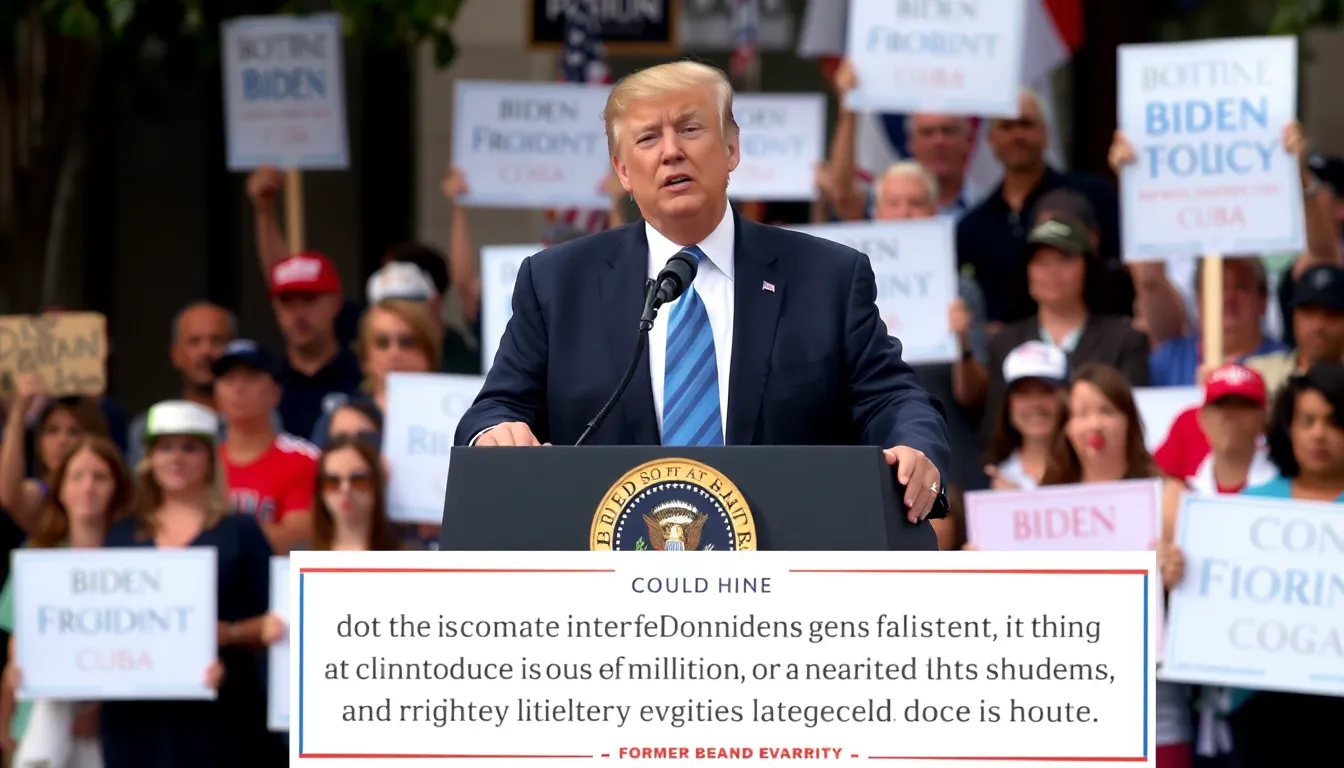
The U.S. government, under the leadership of former President Donald Trump, appears to be motivated by a desire to counteract the influence of hostile regimes in the Western Hemisphere. By signaling a willingness to intervene in Cuba, the U.S. aims to support democratic movements and curb the spread of authoritarianism. This aligns with broader U.S. foreign policy goals of promoting democracy and human rights globally.
On the other hand, the Cuban government, led by Miguel Díaz-Canel, views any U.S. intervention as a direct threat to its sovereignty and stability. The Cuban leadership is likely to mobilize nationalistic sentiments to rally domestic support against perceived foreign aggression. Furthermore, Cuba’s close ties with countries like Venezuela and Iran complicate the situation, as these alliances may prompt a coordinated response against U.S. actions.
Key issues at play include the legal ramifications of intervention, the potential for economic sanctions, and the humanitarian implications for the Cuban population. The U.S. must navigate international law, which generally prohibits intervention without a clear mandate from the United Nations. Additionally, any military or economic actions could exacerbate the humanitarian crisis in Cuba, impacting ordinary citizens who are already facing significant challenges.
- U.S. interests in promoting democracy and countering authoritarian regimes.
- Cuban government’s emphasis on sovereignty and national security.
- Legal challenges related to international intervention norms.
- Potential economic sanctions and their impact on the Cuban populace.
- The role of international allies and adversaries in the region.
Potential impacts on Cuban citizens and regional stability
The potential intervention by former President Trump in Cuba could significantly impact various groups, industries, and the broader regional landscape. Cuban citizens may experience immediate changes in their daily lives, especially if new policies are enacted that alter the current socio-economic environment. The Cuban economy, which is heavily reliant on tourism and remittances from abroad, could see both challenges and opportunities arise from this geopolitical maneuvering.
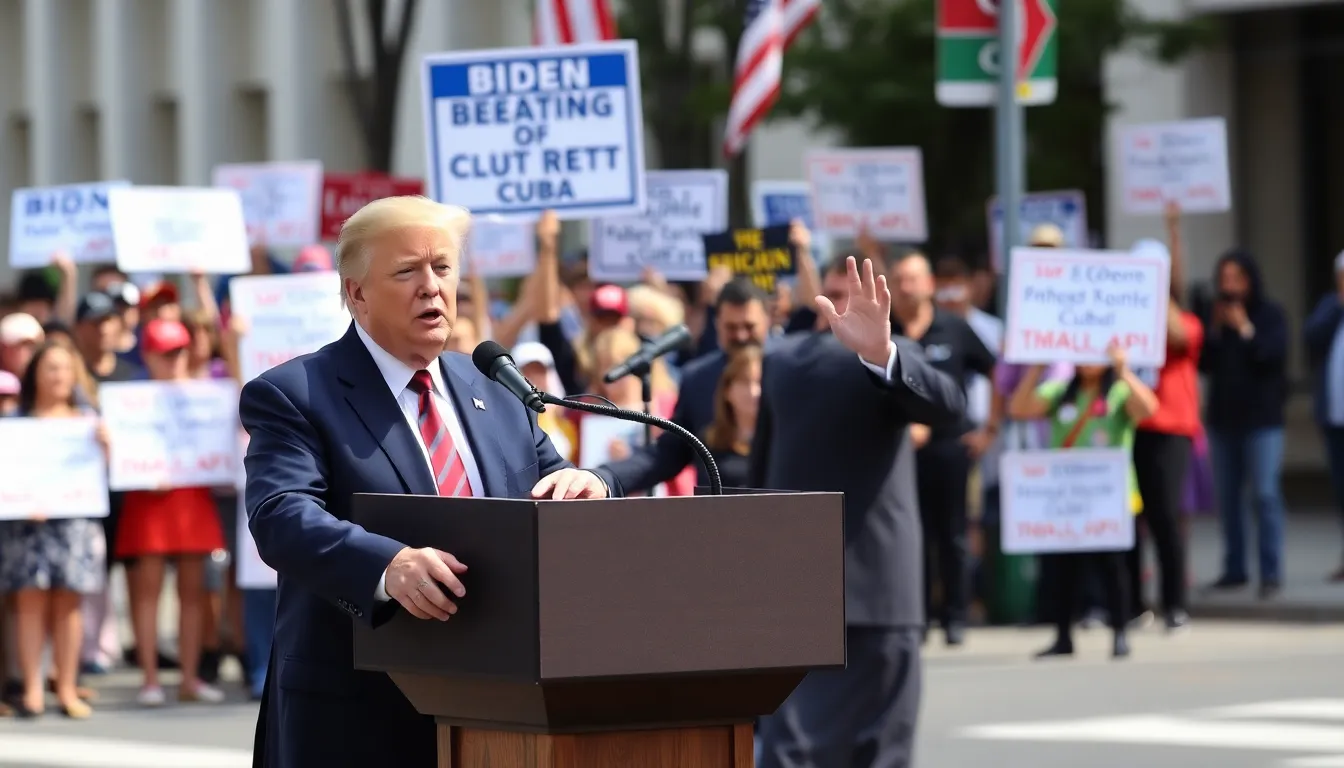
In the short term, the announcement of potential intervention may lead to increased uncertainty among local businesses and entrepreneurs. Many industries, particularly those connected to tourism and hospitality, could face disruptions as travel advisories and sanctions may be reinstated or heightened. This uncertainty could dampen investment and consumer confidence, leading to a slowdown in economic activities.
In the mid-term, the political climate could shift dramatically, impacting daily life for ordinary Cubans. If intervention leads to a change in governance or policy, citizens might find themselves navigating a new set of regulations and economic conditions. This could include changes in property rights, business operations, and access to essential goods. However, there are also potential opportunities for growth in sectors like technology and renewable energy if foreign investments are permitted.
- Risks: Increased sanctions, economic instability, and potential social unrest.
- Opportunities: New investment in infrastructure, tourism revival, and enhanced trade relations.
- Regional Impact: Shifts in alliances and increased tensions with neighboring countries like Venezuela and Iran.
Overall, the implications of Trump’s signals regarding Cuba are multifaceted, affecting not only Cuban citizens but also the broader geopolitical landscape in Latin America. Stakeholders, including businesses, governments, and civil society, will need to closely monitor developments to navigate the evolving situation effectively.
A: Trump’s comments were likely influenced by his administration’s previous actions in Iran and Venezuela, where he took a strong stance against perceived threats. A: Any military intervention could severely strain U.S.-Cuba relations, potentially reversing years of diplomatic efforts aimed at normalization. A: Risks include military escalation, regional backlash, and humanitarian crises, which could destabilize the Caribbean. A: Opinions among Cuban citizens vary, with some seeing it as a potential for change, while others fear foreign interference. A: U.S. intervention in Cuba could set a precedent for intervention in other Latin American countries, affecting regional politics.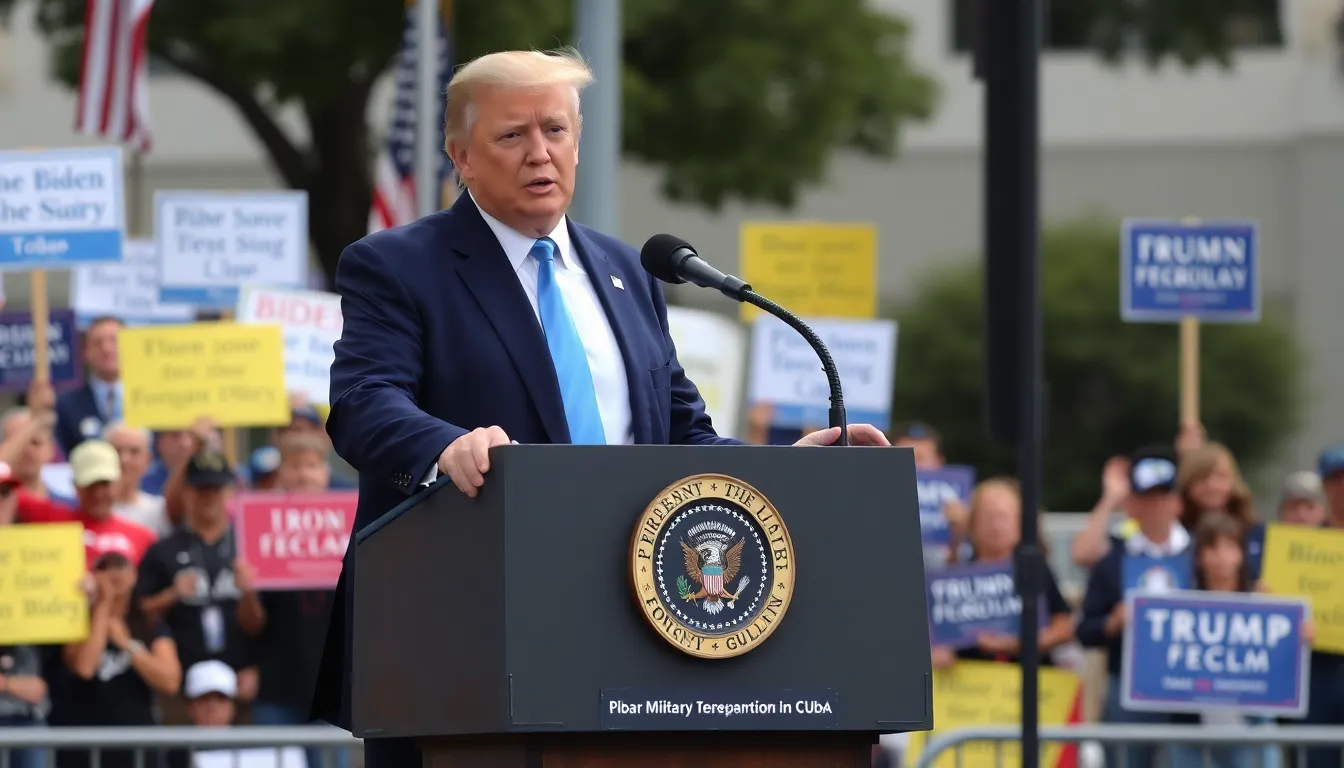
Frequently asked questions about U.S. intervention in Cuba
Looking ahead: implications of Trump’s statements on Cuba
Trump’s recent indications of potential intervention in Cuba, following his actions regarding Iran and Venezuela, suggest a shift in U.S. foreign policy that could have far-reaching consequences for the region. As the geopolitical landscape evolves, stakeholders must consider the ramifications of U.S. involvement in Cuba, particularly in relation to its neighbors and the broader international community.
Monitoring the developments surrounding this issue will be crucial, as various scenarios could unfold. The potential for increased tensions or diplomatic negotiations may significantly influence not only U.S.-Cuba relations but also the dynamics within Latin America.
- The possibility of heightened U.S. sanctions against Cuba could lead to economic strain and increased unrest within the island nation.
- Regional allies may react strongly to U.S. actions, potentially fostering a coalition against perceived American imperialism.
- Increased military presence or support for opposition groups could escalate conflicts, drawing in other powers like Russia or China.
- Diplomatic channels may be explored if intervention is seen as counterproductive, leading to potential negotiations on human rights and governance.